Sun May 3
7.00pm
7.00pm
American Dream – 4K Restoration
film
$15 General Admission
$10 Student/Child/Senior
$7 NWFF Member
First four films presented on 16mm!
(Jon Behrens, 1988-2020, 65 min)
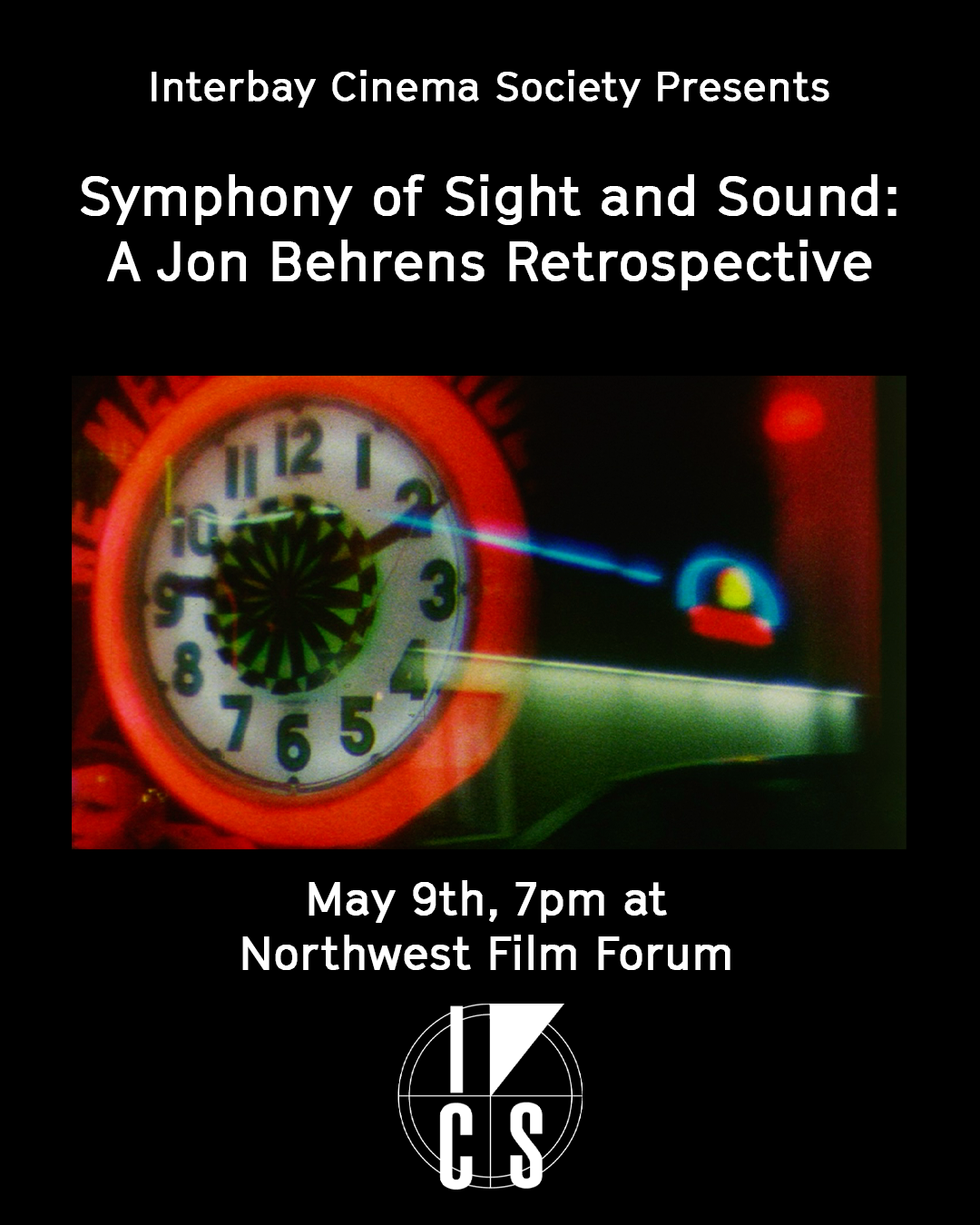
Jon Behrens (1964-2022) was a prolific experimental filmmaker and composer based in Seattle. Demonstrating a broad range of influences and filmmaking techniques, Jon’s works emphasize his boundless creative spirit. From quiet meditations on the natural world around him to audacious and atmospheric depictions of urban landscapes, Jon’s films cement his legacy as a visual poet and chronicler of Seattle’s evolving understanding of itself.
In addition to his creative work, which spans from the late 1970s until his death in 2022, John provided generous support to local analog filmmakers through the establishment of the Interbay Cinema Society, the Lightpress Grants program, Engauge Experimental Film Festival, and other initiatives.
This program spans from Jon’s early work distributed through Canyon Cinema to his gradual adoption of digital forms and showcases a range of styles, including hand-painted 16mm film, optical-printed animation, and one “narrative/experimental hybrid,” notable for its relative straightforwardness in contrast to Jon’s otherwise eclectic and “difficult cinema.” A mix of both released and unreleased films, the program also features a number of collaborations with Jon’s friends, among them fellow filmmakers, artists, musicians, and even fire-eaters. The structure of the program is not chronological, but rather thematic, so as to function as a mood piece, “drowning the viewer in a symphony of sight and sound,” as Jon once wrote.
The first part of this program is presented in 16mm, while the second part consists of digital prints.
Program curated by Brendan Cavanagh, a graduate student at the University of Washington.
FILMS IN THIS PROGRAM:
Part I: Atmosphere (presented on 16mm)
Liquid (1993, 16mm print, black & white with tint, sound, 4 min)
“I made this film with the help of friend Timmi Harrop. She graced the screen in this liquid-like, atmospheric, industrial performance piece. Multiple exposures, water, and weird underwater cinematography shots that create the environment of drowning the viewer in a symphony of sight and sound.”
The Movement of Light at Night (1996, 16mm print, color, sound, 7 min)
“This was the first film that I collaborated with fellow filmmaker and friend Steve Creson. We each shot a 100ft roll of film and we did not know what each other were shooting. The only thing that our footage had in common was the fact that it was all shot in color and at night. At the time that we did this we were each experimenting with new techniques of our own. This took place on a nice summer evening in July of 1996. This film sparked the beginning of a very prolific partnership. Film score by RUBATO.”
Desert Abstractions (1997, 16mm print, color, sound, 9 min)
“This is a film that I had wanted to make for many years. It was not until the summer of 1996 that I actually got it together and shot it. Again with the help of Steve Creson, we packed up all our equipment and loaded onto a plane and flew to Arizona where we rented a car and drove around the desert for a week and filmed everything that we thought looked interesting. This film is similar to the films in my urban landscapes series, only this film was shot in eye-popping full color and there are no manmade elements in this film at all. Lots of rock formations, colors, and shapes—only things made by Mother Nature. This film also has a film score by RUBATO.”
Vernal Obeisance (2003, 16mm print, color, black & white, sound, 7 min)
“The second collaboration I did with R.K. Adams. We proceeded to experiment with the idea of using panels in our films. When we talked about doing this, we decided that we wanted to pay homage to the upcoming spring. The result was this film.”
– Jon Behrens
“This collaboration merges five elements of cinematic vision. Classic Jon Behrens hand-painted elements frame a single image torn into four pieces. The mood alternates between color and black & white cinematography in this experimental homage to spring.”
– Ryan Adams, Alpha Cine Labs
Part II: Alternative Views
Bipacking Experiments Number 1 (1999, 16mm to digital, color, silent, 2 min)
An unreleased, hand-painted film spilling over with color.
Six Arms: Homage to Mekas (2006, 16mm to digital, color, sound, 3 min)
“I was asked to participate in a film program where filmmakers were asked to each shoot a 100ft roll of film in the style of legendary filmmaker Jonas Mekas. This short-burst cinematic film diary was shot on a nice Saturday afternoon at my favorite pub, The Six Arms. I documented my afternoon as it happened. There was no editing at all on this film, it was all done in-camera. I liked the film so much that I decided to add a soundtrack and release it.”
Earth Water Sky (2019, 16mm to digital, color, sound, 3 min)
“This is a film collaboration I did with Dominique Tranchina. We wanted to make a matte box film that contained Earth, Water and Sky and no synthesizers. This is the film we made.”
Color Abstractions Number 8 (2014, 16mm to digital, silent, 5 mins)
Digital manipulation of hand-painted film results in a kaleidoscope of abstract shapes and colors.
As the Snow Begins to Melt (2017, digital, black & white, sound, 1 min)
Winter makes a hasty retreat.
Symmetry (1990, 16mm to digital, color, black & white, sound, 12 min)
“This film was the first, and to this day one of very few, of my films that are considered to be narrative. I think you could call this film an experimental/narrative hybrid and stars underground superstar, Pony Maurice. It is the sad and psychedelic tale of the spiral-like downfall of a young woman, following the breakup with a boyfriend. The film’s theme revolves around the symmetry of things and the symmetry of things to come. Duane Wright wrote the screenplay for this film.”
An Optical Printer Duet (2017, 16mm to digital, color, sound, 3 min)
“I did this collaboration with filmmaker Caryn Cline. Two filmmakers, two direct animation techniques, two optical printers, one roll of 16mm film.”
Seven Minutes in May (1995, 16mm to digital, black & white with tint, silent, 1 min)
“I made this film using my friend Kitty the Fire-eater doing her fire-eating routine at the Pike St. Cinema. I then took all the footage and cut it up into sections not more than 11 inches long. I then added footage that I had taken earlier of an organic nature and repeated the process. I then took all the footage and put it into a garbage bag and cut it all back together again at random. This film was inspired by the early cut-up poems of Wm. S. Burroughs. The film is not seven minutes long and was not shot in May. I wanted the title to be done the same way. I cut up a page out of a magazine and pasted a few words together and came up with Seven Minutes In May.”
One Minute Movie #4 (2013, digital, color, sound, 1 min)
Running water and colorful lights layered over footage of a busy sidewalk conjure up a moody Seattle street scene.
Viaduct (2020, 16mm to digital, color, sound, 7 min)
“Kirsten McCory and I wanted to document the last days of the Alaskan Way Viaduct. We gathered images for about a year before they demolished it. The images were manipulated on an optical printer, and Kirsten told a story of her experiences.”
Light and Water #1 (1988, 16mm to digital, black & white, silent, 1 min)
A short but sweet meditation on beauty and ephemerality.
Brendan is a writer and avid moviegoer. He is currently pursuing both a Master’s in Library and Information Science and a graduate certificate in Cinema and Media Studies at the University of Washington. His Capstone project involves organizing Jon Behrens‘ digital archive and improving the public’s access to his work. This program is intended to honor Jon’s legacy and could not have been undertaken without the patience and generosity of Caryn Cline, Director of the Interbay Cinema Society and one of Jon’s close friends and collaborators.

Interbay Cinema Society’s mission is to provide material support for filmmakers working experimentally with celluloid film
Ticketing, concessions, cinemas, restrooms, and our public edit lab are located on Northwest Film Forum’s ground floor, which is wheelchair accessible. All doors in Northwest Film Forum are non-motorized, and may require staff assistance to open. Our upstairs workshop room is not wheelchair accessible.
The majority of seats in our main cinema are 21″ wide from armrest to armrest; some seats are 19″ wide. We are working on creating the option of removable armrests!
We have a limited number of assistive listening devices available for programs hosted in our larger theater, Cinema 1. These devices are maintained by the Technical Director, and can be requested at the ticketing and concessions counter. Also available at the front desk is a Sensory Kit you can borrow, which includes a Communication Card, noise-reducing headphones, and fidget toys.
The Forum does NOT have assistive devices for the visually impaired, and is not (yet) a scent-free venue. Our commitment to increasing access for our audiences is ongoing, and we welcome all public input on the subject!
If you have additional specific questions about accessibility at our venue, please contact our Patron Services Manager at suji@nwfilmforum.org. Our phone number (206-329-2629) is voicemail-only, but we check it often.
Made possible due to a grant from Seattle Office of Arts & Culture, in partnership with Sensory Access, our Sensory Access document presents a visual and descriptive walk-through of the NWFF space. View it in advance of attending an in-person event at bit.ly/nwffsocialnarrativepdf, in order to prepare yourself for the experience.
NWFF patrons are encouraged to wear masks that cover both nose and mouth while in the building. Disposable masks are available at the door for those who need them. Recent variants of COVID-19 readily infect and spread between individuals regardless of vaccination status.
Read more about NWFF’s policies regarding cleaning, masks, and capacity limitations here.