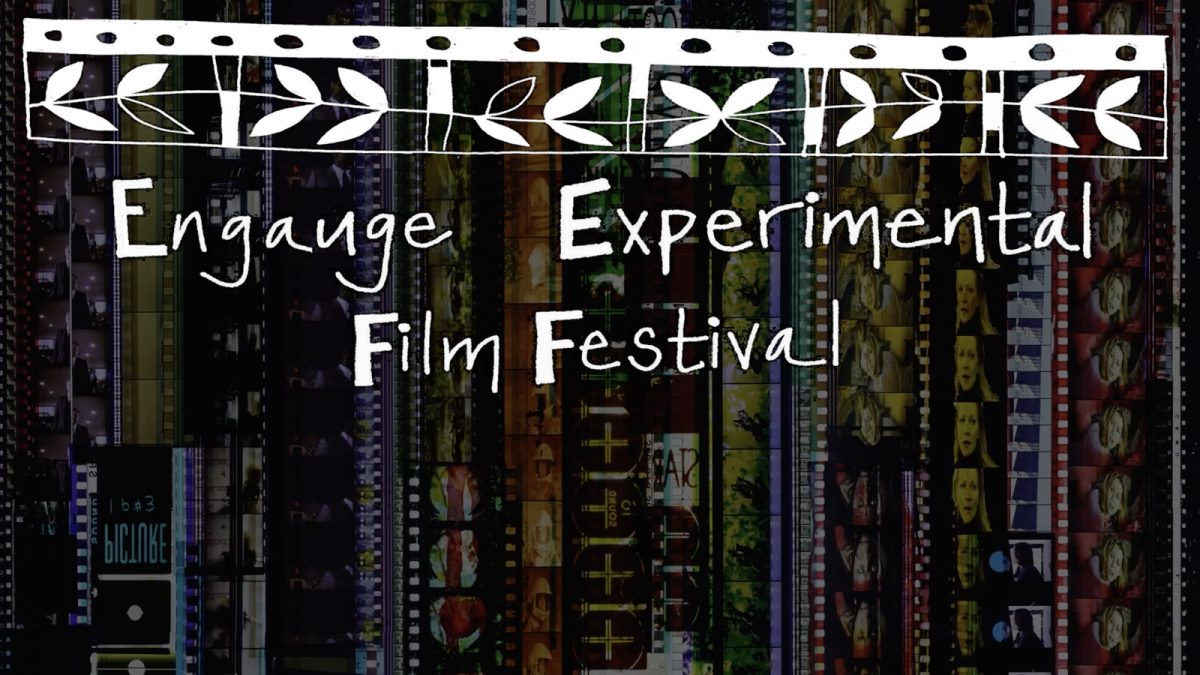
Engauge 2026 – Rankin Renwick Solo Show
INDIVIDUAL FILM PROGRAM TICKETS:
- $15 General Admission
- $10 Student/Child/Senior
- $7 NWFF/SIFF/GI/PCNW member
INDIVIDUAL TICKETS TO SPECIAL EVENTS:
- $18 General Admission
- $13 NWFF/SIFF/GI/PCNW member
- $70 General
- $50 Student/Child/Senior
- $35 NWFF/SIFF/GI/PCNW member
On Film
Screening on film!
Visiting Artist
Conversation with Rankin after the screening
About
Engauge is thrilled to welcome back Portland, OR-based artist Rankin Renwick, this time to present their work in a solo show. All films by Rankin Renwick.
Ticketing, concessions, cinemas, restrooms, and our public edit lab are located on Northwest Film Forum’s ground floor, which is wheelchair accessible. All doors in Northwest Film Forum are non-motorized, and may require staff assistance to open. Our upstairs workshop room is not wheelchair accessible.
We have a limited number of assistive listening devices available for programs hosted in our larger theater, Cinema 1. These devices are maintained by the Technical Director, and can be requested at the ticketing and concessions counter. Also available at the front desk is a Sensory Kit you can borrow, which includes a Communication Card, noise-reducing headphones, and fidget toys.
The Forum does NOT have assistive devices for the visually impaired, and is not (yet) a scent-free venue. Our commitment to increasing access for our audiences is ongoing, and we welcome all public input on the subject!
If you have additional specific questions about accessibility at our venue, please contact our Patron Services Manager at rajah@nwfilmforum.org. Our phone number (206-329-2629) is voicemail-only, but we check it often.
Made possible due to a grant from Seattle Office of Arts & Culture, in partnership with Sensory Access, our Sensory Access document presents a visual and descriptive walk-through of the NWFF space. View it in advance of attending an in-person event at bit.ly/nwffsocialnarrativepdf, in order to prepare yourself for the experience.
NWFF patrons will be strongly encouraged to wear masks that cover both nose and mouth while in the building. Disposable masks are available at the door for those who need them. Recent variants of COVID-19 readily infect and spread between individuals regardless of vaccination status.
Read more about NWFF’s policies regarding cleaning, masks, and capacity limitations here.
Films in this program:
Toxic Shock
(color/sound | 2:50 | S8 to 16mm | 16mm print | 1983)
A visceral personal response to surviving a near-fatal case of Toxic Shock Syndrome. Toxic Shock combines intimate taboos of needles, blood and tampons with tried and true hands-on self-defense, set to a spare, penetrating and unknown score provided by a cassette tape gifted by a forgotten friend. A call to arms; what will you do in defense of your body?
Portrait #1: Cascadia Terminal
(color/sound | 6:00 | 16mm hand processed and tinted to digital | 2005)
A 6-minute mesmerizing stare at the most historically efficient grain terminal at the port of Vancouver, B.C. The Canadian Pacific Railway services the terminal, which can unload up to 300 cars in 24 hours, a pace equal to approximately 25,800 tons of prairie grain. Why are we so attracted to the power of industrial sites? Many kids used to hang out here, get high and make out; it has the feel of a ruin though it is still in operation. A huge compound on the water within the city of Vancouver, Cascadia Terminal expands the spirit and gives the feeling of space, of being maybe further out in the country. There even used to be a squat for a bit, in an industrial building near the property. The gentle intimacy of the beautiful score invites us to step into the landscape, but sadly due to Homeland Security measures affecting coastal ports enacted since this filming, we are no longer allowed.
Note: The Portrait Series is part of an ongoing series of filmed places, stories and histories of Cascadia with scores by musicians living in the Pacific Northwest. Portrait #3: House of Sound (2009) will screen later in this program. Portrait #2: Trojan screened at EEFF 2025.
Britton, South Dakota
(b&w/sound | 9:00 | 16mm to digital | 2003)
Ivan Besse managed the Strand movie theater in Britton, South Dakota during the Depression. Besse owned a 16mm camera and used it to shoot people at their various activities around town during the day. He screened the local footage before feature films and newsreels as a lure to entice paying customers into the theater. Of the 2 1/2 hours of footage, most of it depicts townspeople walking down the street; there are also scenes of a barn being moved, a cornhusking contest and kids running out of a school. What really stands out is 8 minutes of children’s portraits. The subjects–dressed in what appears to be their Sunday best–clearly had no notion of a movie camera. The lack of an overt narrative creates a sort of cinematic paper doll environment–the film invites viewers to drape these images with futures, which have long since become histories. The drone of Johnne Eschleman’s accompanying melancholy organ composition casts a tragic shadow over these bright faces, one that may or may not have come to pass.
Crowdog
(b&w & color/sound | 7:00 | Super 8 to digital | 1984/1998)
An early encounter with Peter Mathiessen’s 1983 book In the Spirit of Crazy Horse concerning the fallout of the FBI’s ‘Reign of Terror’ over the American Indian Movement led a teenaged filmmaker on a pilgrimage to the Pine Ridge Indian Reservation in South Dakota. This journal entry of a film describes a young artist in the midst of over two years of shoe-free peregrinations, with a spare, mesmerizing narration that reflects a landscape ranging from the slimy underbelly of dirty Chicago to a hitchhiker’s perch in the back of a dusty pickup truck. See the kindness of the older self who dares also to show us the convictions of our youth. Bare feet on a paved road, a white girl stands to one side of a white line, a wolf dog weaves and dances before the camera.
Yawn
(color/sound | 2:00 | 16mm to digital | 1998)
Two sublime minutes of the human experience: the color orange, piano, a wordless documentary on both the inhale and the exhale. The unspoken challenge: can the viewer last without joining the fray?
Olympia
(b&w/sound | 11:00 | S8 to digital | 1984/1998)
The ultimate origin story, eleven grueling minutes of a home birth. Midwives and friends surround a naked woman bulging with life as she endures the last eternal moments of her pregnancy and a child arrives. The grainy, black-and-white super-8 film softens the visual experience, while the pulsating soundtrack recalls approaching helicopters or jackhammer job-sites–birth from the point of view of the forthcoming baby. The camera never flinches; even as the new human crouches on m30 ama’s flattened belly and the music eases into hypnotic low string meditations, and the viewer aches for release into the comfort of the family circle, still the afterbirth must emerge before the film pulls back to reveal an ordinary living room, an ordinary day.
9 is a secret
(b&w/sound | 6:00 | 16mm and video to digital)
“Renwick recounts a sad time in her life, when a friend was dying and she suddenly became aware of the presence of crows. The dark birds in turn point her to the practice of counting crows, which is both a children’s rhyming game and a form of divination in which the number of crows suggests events in the future. Eight crows augur death: nine crows reference a secret. Renwick combines these fragments with glimpses of imagery – a bed, the crows captured as silhouettes, a man’s twisted body – to craft a lyrical and moving essay that works its magic through poetic accretion rather than narrative logic.” –Holly Willis, L.A. Weekly
Crackhouse
(color/sound | 2:30 | S8 to digital | 2015)
Mosaic artist Jeffrey Bale, described by the New York Times as a ‘rock star’, transformed a former Portland crack house into a stone art paradise, an urban sanctuary and bird haven. Crack House, edited in camera, is a cosmic burst of color and sound created to celebrate the 50th anniversary of the introduction of Super 8 film.
Portrait #3: House of Sound
(b&w/sound | 11:22 | 35mm to digital | 2009)
In the 1950s, Williams Avenue had the most significant concentration of Blacks living in Portland. In the late ‘50s, pushing an ‘urban renewal’ policy and exercising the power of eminent domain, the Portland City Council condemned almost the entire neighborhood to replace it with the Memorial Coliseum, Rose Quarter and Emmanuel Hospital. Edited film and an edited 5-hour radio show dedicated to the memory of the House of Sound record store, this is a eulogy for the former community center and for all the places up and down the street that used to fill those empty lots, now unrecognizable as mixed-use, high-rise hyper-urban development.
SF Hitch
(b&w & color/sound | 5:17 | S8 and 16mm to digital | 2012)
Shot and edited over the span of three decades, SF HITCH recounts the artist’s experience of hitch-hiking with their feisty canine companion from Chicago to San Francisco in 1981. Both visuals and narrative are woven together with the agility and vitality of Beat poetics—a reflection of the experience of unmoored travel and an homage to the very artists they meet upon arrival.
“My wolf dog Zeb and I set off hitching in the early 80’s from Chicago to SF to see what it’s all about. We met some beats and some freaks.” – Rankin Renwick